
Dubai Municipality has set a target for 40% of new buildings in the emirate to use modern and smart construction technologies by 2033, as the city prepares for its next phase of urban growth.
The target was presented on 13 October 2026 during the Mohammed bin Rashid Leadership Forum, where government and private-sector leaders gathered to discuss Dubai’s next phase of development.
Marwan Ahmed bin Ghalita, Director General of Dubai Municipality, outlined the plans during a session titled “Dubai Municipality and Life in Dubai 2033”, covering construction technology, infrastructure, green spaces, digital twins and the future management of the city.
What Dubai announced
Dubai Municipality says 40% of new buildings should use modern and smart construction technologies by 2033. The technologies being advanced include artificial intelligence, modular construction, robotic building systems, 3D printing and digital tools designed to improve construction and city management.
Smart Construction Is Moving Into Dubai’s Mainstream
The 40% target signals that advanced construction methods are expected to move from individual pilot projects into a much larger share of Dubai’s future building stock.
Dubai Municipality highlighted technologies including artificial intelligence, robotic construction systems, modular construction and 3D printing as part of its plans to increase efficiency and strengthen Dubai’s position as a centre for construction innovation.
The Municipality already has an established strategy for 3D-printed construction, with an earlier target for 25% of new buildings to incorporate 3D-printing technology by 2030.
Digital Twins Will Also Play a Bigger Role
The forum also highlighted Dubai Municipality’s continued development of digital twin technology for city management.
Digital twins create virtual representations of physical assets and infrastructure using real-world data. Combined with artificial intelligence and real-time information, they can help authorities monitor city systems, model future demand and make faster planning decisions.
For the property sector, increasingly detailed building and infrastructure data could eventually support more informed decisions around development, asset management and maintenance.
Dubai Is Also Investing AED30 Billion in Drainage Infrastructure
Construction technology was only one part of the announcement.
Dubai Municipality also highlighted the AED30 billion Tasreef programme, an integrated rainwater drainage project scheduled for completion in 2033.
Once completed, the system is expected to increase Dubai’s rainwater drainage capacity by approximately 700% and handle more than 20 million cubic metres of water per day.
For property owners, major infrastructure projects can matter beyond the immediate construction sector because the resilience and capacity of surrounding infrastructure form part of the long-term quality and attractiveness of a location.
Dubai Plans 3.5 Million More Trees
The Municipality also outlined a major expansion of Dubai’s green infrastructure.
By 2040, Dubai aims to plant approximately 3.5 million trees and expand green and landscaped areas to 187 square kilometres.
The plans target approximately 11 square metres of green space per person and as many as 95 million annual visits to parks and recreational facilities.
For residential owners, improvements to public spaces and surrounding neighbourhood infrastructure can become part of the wider attractiveness of a community, although their effect on individual property values will depend on location and project delivery.
What This Means for Existing Property Owners
The 40% target applies to future construction rather than imposing an immediate requirement for existing apartments and villas to become smart buildings.
However, a larger supply of technologically advanced new buildings could gradually change what tenants and buyers expect from residential property.
Features such as efficient cooling and energy systems, smart access, automated building management, predictive maintenance and stronger digital services may increasingly become points of comparison between older and newly delivered buildings.
That does not mean every older property requires expensive technology upgrades. Owners should assess whether improvements produce a realistic benefit in operating costs, tenant experience, rentability or resale appeal.
Property Management Could Become More Technology-Driven
Smart buildings also change the role of property management.
Instead of responding only after equipment fails, connected building systems can potentially identify performance problems earlier and provide managers with more detailed operational information.
For owners comparing property management companies, technology capabilities may therefore become increasingly relevant alongside commission, maintenance coordination and tenant service.
The useful question is not whether a manager uses AI because it sounds modern, but whether technology produces measurable improvements in response time, preventative maintenance, operating efficiency or reporting.
New Buildings Could Raise the Competition for Older Stock
Dubai continues to add substantial residential supply, which means older properties increasingly compete not only on price and location but also on the quality of the building itself.
If a larger proportion of future buildings incorporates smart construction, efficient systems and modern infrastructure from the design stage, landlords in older buildings may need to pay more attention to maintenance quality and unit condition.
A well-maintained older apartment in a strong location can remain highly competitive, while unresolved maintenance issues become more visible when tenants have newer alternatives nearby.
What Property Owners Should Watch Next
The most important development to watch will be how Dubai translates the 40% target into practical building standards, approvals and new projects over the coming years.
Owners should also watch which smart-building features become standard in newly delivered residential projects rather than optional premium additions.
For existing assets, the relevant question will be whether selected upgrades can improve operational performance and tenant experience sufficiently to justify their cost.
What property owners should know
- Dubai Municipality announced at the Mohammed bin Rashid Leadership Forum on 13 October 2026 that 40% of new buildings are targeted to use modern and smart construction technologies by 2033.
- Technologies highlighted include artificial intelligence, robotic construction, modular building methods, 3D printing and digital twin systems.
- Dubai also highlighted the AED30 billion Tasreef project, which is expected to increase rainwater drainage capacity by 700% by 2033.
- Dubai’s 2040 urban targets include planting approximately 3.5 million trees and expanding green and landscaped areas to 187 square kilometres.
- The 40% target concerns future construction, but a growing stock of smart buildings could increase competition and change tenant expectations for existing properties over time.
Source
Emirates News Agency (WAM), 13 October 2026. Coverage of the Mohammed bin Rashid Leadership Forum and Dubai Municipality’s presentation of its future development priorities, including the 40% smart-construction target, Tasreef infrastructure programme, green-space expansion and digital twins. View the report.
Gulf News, 13 October 2026. Detailed reporting from the “Dubai Municipality and Life in Dubai 2033” session, including Dubai’s smart construction, drainage, urban greening and digital twin targets. View the report.
Dubai Municipality — 3D Printing in the Construction Sector. Official background on Dubai’s existing construction technology strategy, including its 3D-printing programme and regulatory framework. View the official guidance.
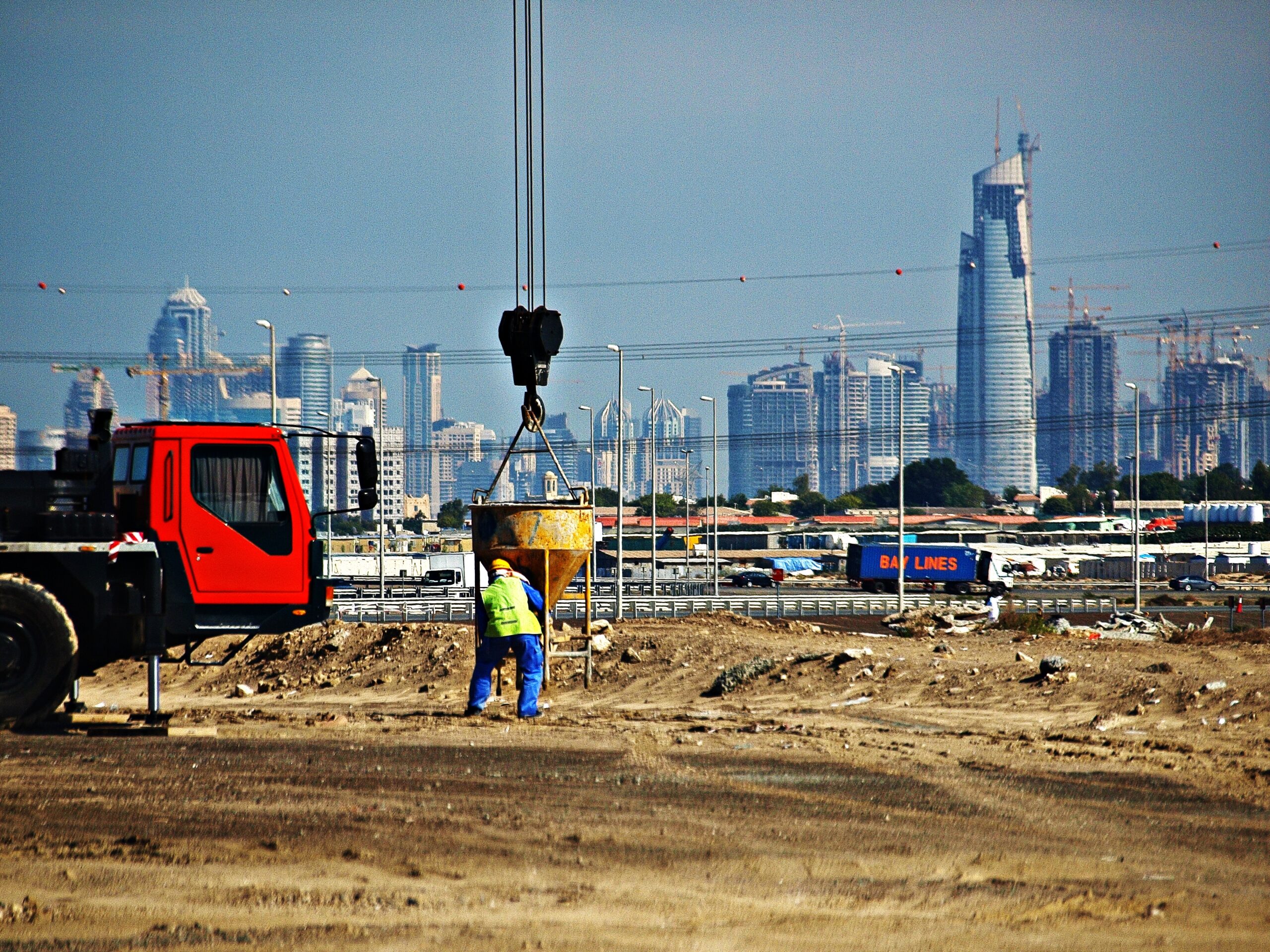
Image source — Wikimedia Commons. “Dubai under construction.jpg”, photographed by Basil D Soufi. Original image: 3,648 × 2,736 pixels, licensed under CC BY-SA 3.0. View image source and licence.
Looking for a property management company in Dubai?
Compare Dubai property management companies, their fees, services, rental strategies and owner terms before choosing who should manage your property.


